Back to e-zine
|
||||||||||||||||||||||||||||||||||||||||||||
 |
About EIA EIA is a campaigning organisation that investigates and exposes international environmental crime and mobilises political will for the protection of wildlife and the environment. Our motivation is simple; we are outraged by crimes against endangered wildlife, the world’s most precious habitats and the planet’s vital ecosystems. We are determined to stop them by blowing the whistle on environmental crime. EIA is a very small charity with a big voice. Since 1984, we have pioneered the use of undercover investigation in the environmental movement. Our investigators gather unique film, photos and information from across the world - frequently at great personal risk. We often get there first, assemble evidence, and raise the alarm by alerting the media and lobbying governments so they can take action. EIA has initiated changes in international laws and in the policies and practices of governments and companies. We have a remarkable history of success, which has saved the lives of millions of rare and endangered animals and put a stop to the devastating effects and cruelty of environmental criminals. Warning: Division by zero in /home/thenaturalstore/public_html/cms_section2.php on line 284
Forests Campaign The issue of illegal logging is justifiably receiving unprecedented political and media attention around the world. One of the countries most affected is Indonesia, where up to 80% of logging is illegal. This rampant timber theft has led to one of the highest rates of deforestation in the world - every year an area almost as large as Belgium is lost. Since 1997 EIA has worked in partnership with an Indonesian organisation called Telapak. Together we have exposed illegal logging occurring in Papua’s National Parks, worked with other organisations and communities throughout Indonesia and promoted ideas and information to improve forest policy in Indonesia and throughout the world. Calling a halt to the international multibillion dollar trade in illegal wood is a daunting task but our relentless hard work and determination has been fruitful. The shocking findings published in one of our recent reports “The Last Frontier” led the new president of Indonesia to launch an enforcement crackdown in Indonesia of unprecedented scale and effectiveness. Almost overnight our work led to the closure of the single largest illegal trade route in the world. Warning: Division by zero in /home/thenaturalstore/public_html/cms_section2.php on line 284
Ozone Layer Protection Campaign Life on Earth depends on the fragile ozone layer, which screens out harmful ultraviolet radiation. In the mid 1980s scientists first observed a 'hole’ in the ozone layer over the Antarctic – resulting from the widespread use of a range of ozone-depleting substances (ODS). These include chlorofluorocarbons (CFCs) mostly used for refrigeration and air-conditioning, and halons, used to extinguish fires. The ozone layer absorbs solar ultra-violet radiation, protecting humans from skin cancer, cataracts and immune system deficiencies. The continuous depletion of ozone levels not only poses a threat to human health, but studies have also suggested that ultra-violet radiation is harmful to other forms of life - from bacteria to agricultural crops. EIA is the only non-governmental organisation to consistently monitor and expose the illegal trade in ozone depleting substances. As such, the US Environmental Protection Agency has just awarded EIA a prestigious award in recognition of our decade long fight to protect the ozone layer. Warning: Division by zero in /home/thenaturalstore/public_html/cms_section2.php on line 284
If you thought the whale had been saved - think again. Cetaceans - whales, dolphins and porpoises - need greater protection than ever, not only from hunters, but also from the destruction of their environment. The International Whaling Commission (IWC) is the intergovernmental body responsible for the conservation of whales and the management of whaling. It was set up in 1946, but it was not until the 1980’s, after decades of over exploitation, did the IWC move to a more conservationist agenda. This was heralded by the historic Moratorium in 1986 which called for an international ban on commercial whaling. From the time it was implemented, and despite its success, Norway, Japan and Iceland have waged an insidious and determined campaign to overturn the ban. The issue of lifting the whaling ban came to a head at this year’s IWC. EIA sent a team of campaigners to the conference to try and persuade diplomats and the scientific committee that the resumption of commercial whaling would be detrimental to the survival of whales. Despite our efforts, pro-whaling countries won a dangerously historic majority vote to resume commercial whaling. Although they did not have enough votes to over turn the ban, it should act as a wake up call to all those countries and people that want to protect whales. In addition to lobbying against pro-whaling nations at the IWC, EIA has also helped to spearhead a coalition of leading NGOs which has forced major Japanese whaling companies to divest themselves of their whaling shares. We have also pursuaded over 2,500 supermarkets in Japan to stop selling cetacean products. As you can probably understand the year ahead will be of key importance in the fight to save the world’s cetaceans. We need to continue our relentless battle against pro-whaling nations to make sure this symbolic ban stays firmly in place.
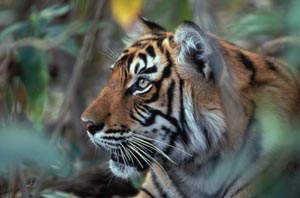
100 years ago there were 100,000 tigers across Asia. Today there are less than 5,000. More tigers are kept as pets in the USA (approximately 12,000). India is home to around half of the worlds remaining wild tigers, where they face threats from habitat loss and population decline due to their poaching for international trade. Warning: Division by zero in /home/thenaturalstore/public_html/cms_section2.php on line 284
EIA’s Tiger Campaign delivers the hard-hitting truth about those who have failed to act and those that are ultimately responsible for sealing the fate of the world’s remaining tigers. Our exposes arm those, both inside and outside of government, with the information they need to continue the battle for the tiger. And the results are promising, our investigations have recently prompted international concern and a call to action through the Convention on International Trade in Endangered Species (CITIES). Warning: Division by zero in /home/thenaturalstore/public_html/cms_section2.php on line 284
Once again, elephants are under serious threat. The gradual recovery of their population since the ban on the ivory trade, in 1989, is now undermined by recent decisions in 1997 and 2002 by the international community, allowing one-off sales of ivory. Hundreds of thousands of African elephants were slaughtered during the 1980’s to supply the insatiable demand of the world's ivory markets. EIA's investigations into the billion-dollar trade uncovered the movement of ivory from all over Africa to the carving factories of Dubai, and on to the consuming markets of the Far East. With the help of committed conservationists our campaign paved the way for the 1989 international ivory ban. Poaching levels plummeted as a result. Warning: Division by zero in /home/thenaturalstore/public_html/cms_section2.php on line 284
Warning: Division by zero in /home/thenaturalstore/public_html/cms_section2.php on line 284
Cattle fences have become an increasing feature of Botswana's semi-arid landscape. The fences are designed to prevent the spread of disease between wildlife and cattle. On paper such fences have the potential to be beneficial to both wildlife and local communities. However, their impact on the traditional migratory routes of Botswana's wildlife has made these barriers a source of controversy. Two years ago a fence was erected along the dry Boteti riverbed on the western periphery of the Makgadikgadi and Nxai Pan National Park. Since the Boteti stopped flowing several years ago, incidents of human-wildlife conflict in the area had increased dramatically at great cost to both. Prior to the fence’s construction, an Environmental Impact Assessment was made. Several recommendations were put forward to reduce the negative impact of the fence on wildlife. However, these were largely ignored by Botswana’s Department for Wildlife and National Parks (DWNP) due to lack of will, lack of resources and pressure from local farmers for greater access to grazing and water resources for their cattle. Today, the greatest concern is the reduction in wildlife’s access to water, which has already had a dire effect on local and migratory populations. In January 2005, Botswana's local media reported that 300 zebra had perished along the fence following their annual dry season migration from the east of the park in a confused and desperate attempt to reach traditional waterholes and seeps in the riverbed. Therefore, a key focus of EIA's campaign has been to lobby for the establishment of a coherent and adequate water management plan for the Makgadikgadi National Park. EIA is also lobbying to prevent a similar situation from occurring in the Okavango Delta in Ngamiland. The Okavango is the world's largest inland delta, creating a maze of lagoons, channels and islands that spread for thousands of miles, making it an important source of water for surrounding people and wildlife. The Delta is currently bordered by cattle fences to the north and south. Yet, despite its ecological importance and the negative effects of existing fences, Botswana's ministry of Agriculture, backed by the cattle industry, is pressing for a significant enlargement of the fenced areas in order to increase national beef exports to the EU. If these proposals go ahead, they could seriously interfere with wildlife’s traditional migratory routes, preventing large populations from reaching the Delta's precious water. EIA needs support now EIA has achieved enormous successes over the last two decades, but raising funds for our work is a constant challenge. As a very small charity, we rely heavily on committed supporters and volunteers and the generosity of individuals, charitable trusts and foundations to enable to continue our work. To sign up for our eNews, become a member or to make a donation, please contact Margaret Ruttle on 020 7354 7980 or via email at margaretruttle@eia-international.org, or visit us at www.eia-international.org >> EIA is a registered charity, regulated by The Charity Commission (charity number 1040615). Copyright Notice for Photographs © M. Yayat Afianto / Environmental Investigation Agency / Telapak © Jago Wadley / Environmental Investigation Agency / Telapak © Ezra Clark / Environmental Investigation Agency © Ezra Clark / Environmental Investigation Agency © Robin Hamilton © Nick Mole / Environmental Investigation Agency © Mary Rice / Environmental Investigation Agency © Rachel Noble / Environmental Investigation Agency © Ezra Clark / Environmental Investigation Agency © Mia Strickland / Environmental Investigation Agency © Craig Gibson / Environmental Investigation Agency |
|||||||||||||||||||||||||||||||||||||||||||